


|
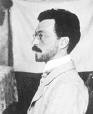
Wassily Kandinsky, the father of abstract art, also a skilled musician, strongly associated music with art. Kandinsky, who named works after musical terms, saw color when he listened to music, and believed color could visually express music’s timber, pitch and volume. At age 30, Kandinsky’s artistic career began when he left a legal career to pursue artistic studies after seeing Monet’s “Haystacks.” Passionately compelled to create, Kandinsky believed that the purity of this desire would communicate itself to viewers of his work.
"Of all the arts, abstract painting is the most difficult. It demands that you know how to draw well, that you have a heightened sensitivity for composition and for colors, and that you be a true poet. This last is essential." ~ Wassily Kandinsky Wassily Kandinsky (December 16 1866 – December 13, 1944) was a Russian painter, printmaker and art theorist. One of the most famous 20th-century artists, he is credited with painting the first modern abstract works. Born in Moscow, Kandinsky spent his childhood in Odessa. As a young man he enrolled at the University of Moscow and chose to study law and economics. Quite successful in his profession—he was offered a professorship (chair of Roman Law) at the University of Dorpat—he started painting studies (life-drawing, sketching and anatomy) at the age of 30. In 1896 he settled in Munich and studied at the Academy of Fine Arts, Munich. He went back to Moscow in 1914 after World War I started. He was unsympathetic to the official theories on art in Moscow and returned to Germany in 1921.¹ |
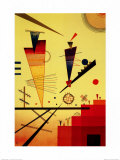
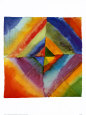
All Kandinsky Posters and Prints >>
Featured Wassily Kandinsky Posters & Art Prints
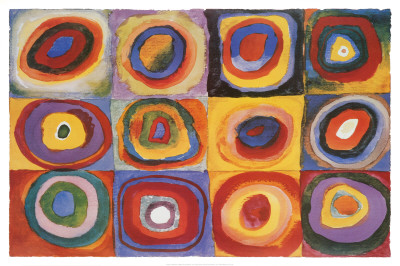
Farbstudie Quadrate, c.1913
36 in. x 24 in.
Mit und Gegen, c.1929
31 in. x 24 in.
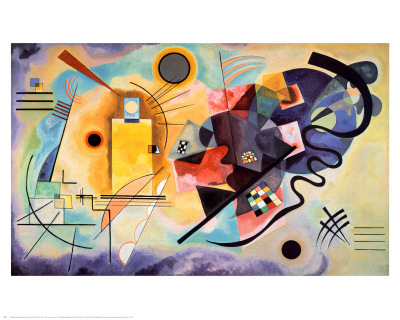
Gelb Rot Blau
30 in. x 24 in.
Related Art Sites
- Wassily Kandinsky Posters @ art.com
- Pre-Framed Wassily Kandinsky Posters
- The Amazon Art Shop
- ¹ Complete Bio @ Wikipedia.
Recommended books on Wassily Kandinsky: Masters of Art: Kandinsky (Masters of Art (Harry N. Abrams, Inc.).); Wassily Kandinsky (Prestel Colouring Books); Wassily Kandinsky And Gabriele Munter: Letters And Reminiscences, 1902-1914 (Pegasus Library); Wassily Kandinsky: 1866-1944 a Revolution in Painting (Basic Art); Wassily Kandinsky, Prestel USA; Kandinsky Compositions (The Museum of Modern Art, New York); Wassily Kandinsky, 1866-1944: The Journey to Abstraction (Big Art Series) Taschen; Kandinsky: Watercolors and Drawings (Art & Design) Prestel Publishing.
Available here are these Wassily Kandinsky posters and prints, among others: Mit und Gegen; Yellow, Red and Blue; Weiches Hart; Farbstudie Quadrate; Hommage to Grohmann; Balancement; Structure Joyeuse; Merry Structure; Improvisation #23; Heavy Red; Composizione VIII; Gravitation; Houses in Munich; Komposition VII; Grand Torre, Kiev; Helles Bild; Color Studies; Quiet Harmony.
© Copyright 2003- by Ace Toscano. All rights reserved.

